The Role of Lighting in an Outdoor Reception
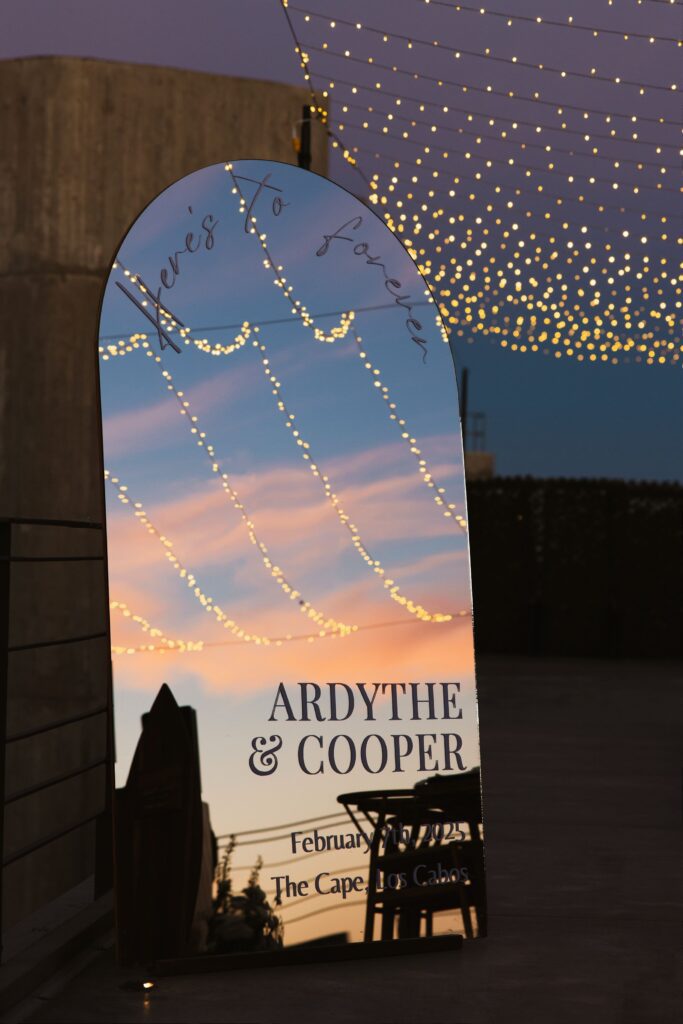
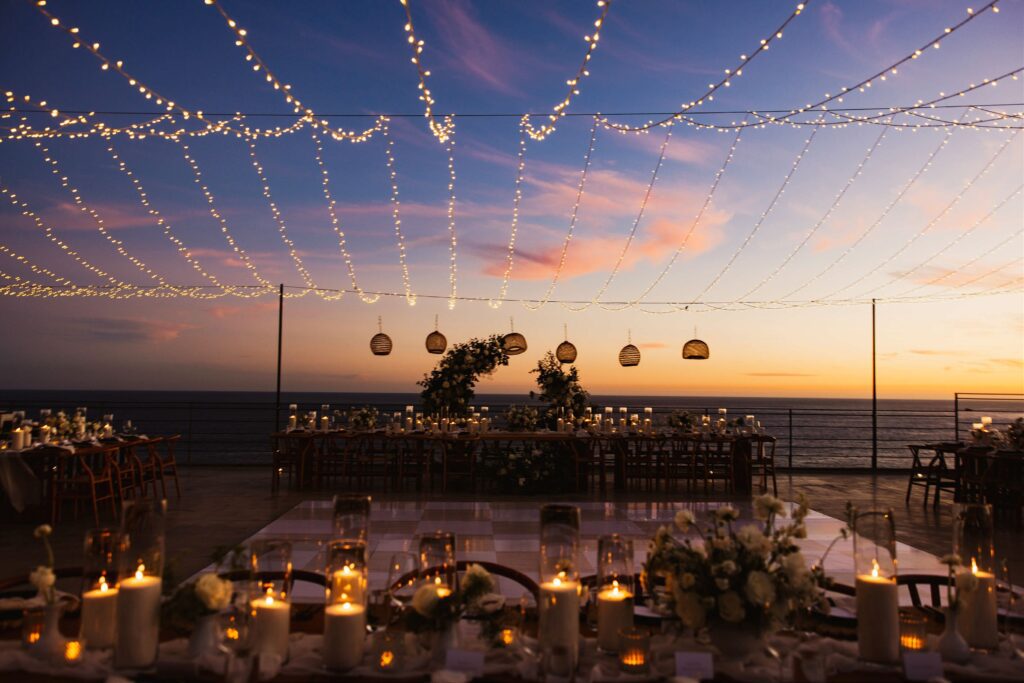
As natural light fades, structure becomes essential. A well-designed lighting plan does more than illuminate, it defines the space. Overhead string lights create a visual ceiling, bringing intimacy to an otherwise open environment. This is especially important in destinations like Cabo, where expansive views can feel vast without thoughtful framing.
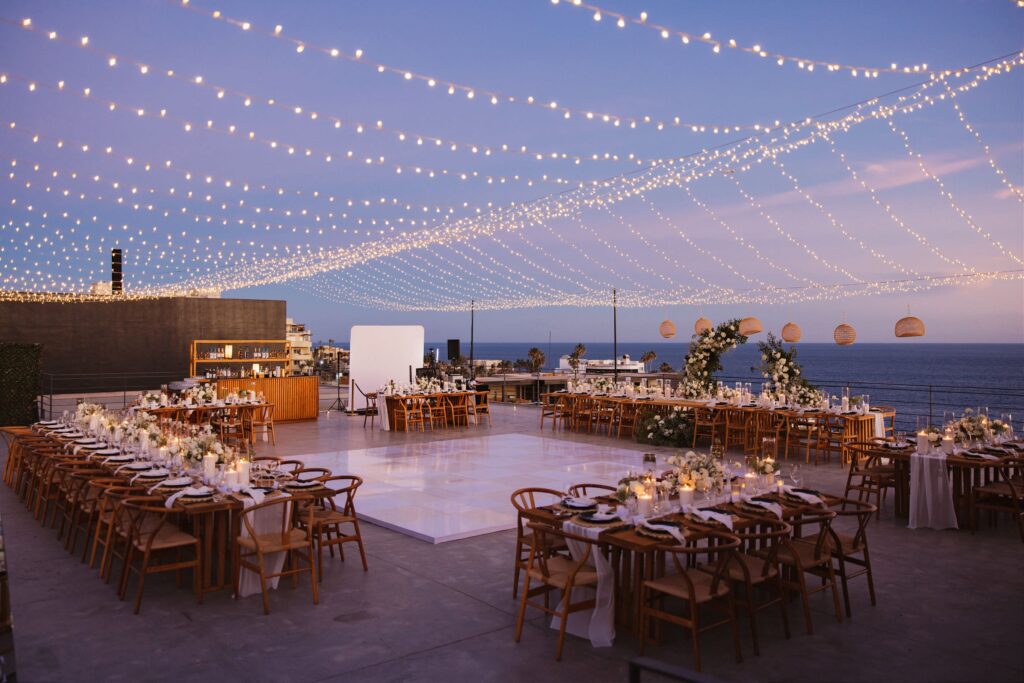
In these setups, the grid of warm lights above the reception anchors the layout. It subtly directs attention toward key areas like the dance floor, head table, and central design moments. The result is a space that feels cohesive rather than dispersed.
Lighting is not added at the end. It is planned early, because it influences layout decisions, guest flow, and overall atmosphere.
Layering Light for Depth and Warmth
A strong lighting design always works in layers. Overhead lighting establishes structure, but the experience at guest level is equally important.
Candlelight plays a critical role here. It softens the environment and creates a sense of closeness at each table. When paired with textured elements like glass votives or natural materials, it adds dimension without overwhelming the design.
Hanging lanterns introduce a secondary focal point. They break up the uniformity of string lights and bring the eye down into the space. This balance between overhead and mid-level lighting ensures the design feels intentional from every angle.
The key is restraint. Too many lighting elements compete. A curated mix allows each layer to serve a clear purpose.
Designing the Transition from Sunset to Evening
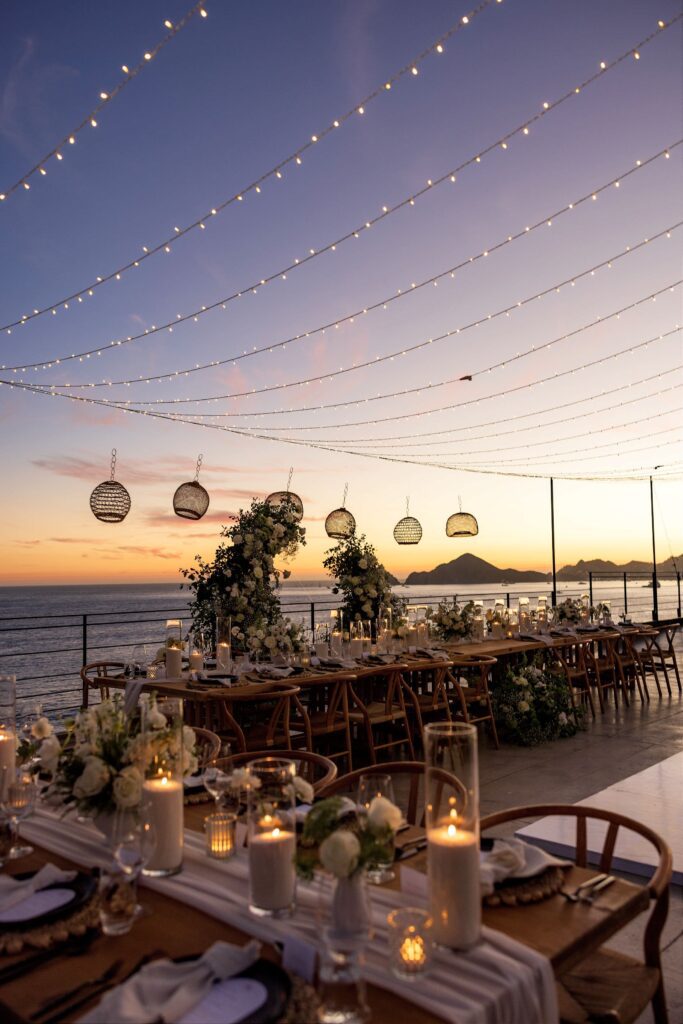
One of the most overlooked planning decisions is how the reception evolves over time. Sunset is a moment, not the full experience.
The lighting must be calibrated to carry the event beyond that moment. Early in the evening, the goal is subtle enhancement. As the sky darkens, the lighting should gradually take prominence without feeling abrupt.
This is why warm-toned lighting is consistently used in destination weddings. It complements the natural colors of sunset and transitions seamlessly into evening. Cooler lighting, by contrast, can disrupt the atmosphere and feel disconnected from the setting.
A successful design anticipates this shift. It ensures that the space feels just as considered at 9 PM as it does at golden hour.
When Lighting Becomes Part of the Design Story
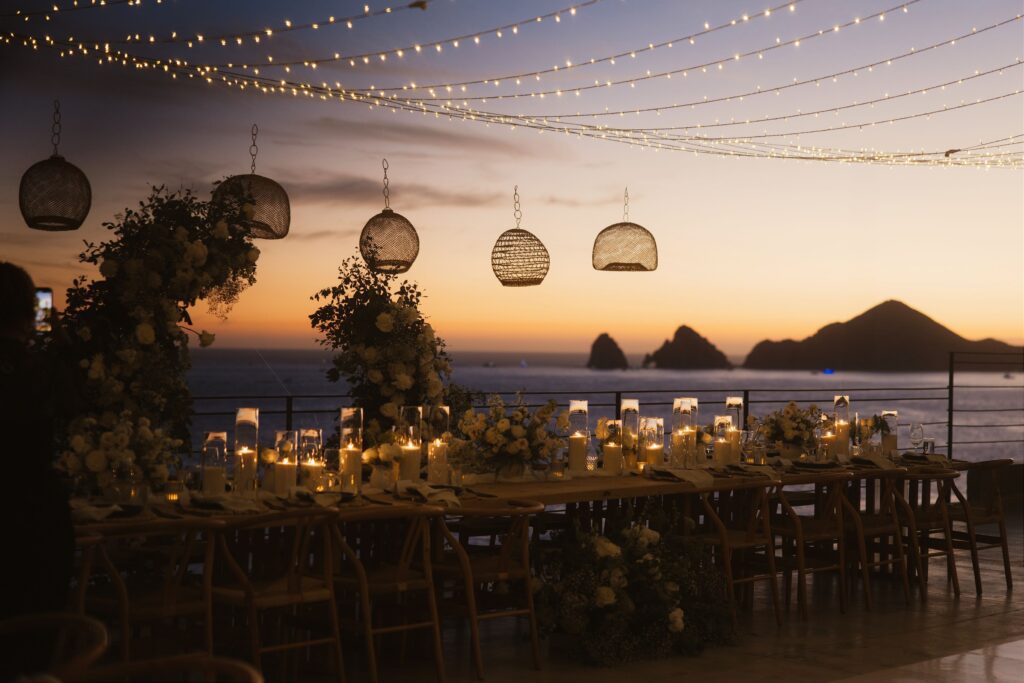
Beyond function, lighting becomes one of the most visible design elements in the entire reception. It appears in every photo, frames every moment, and influences how guests remember the evening.
Even details like a mirrored welcome sign take on a different presence when surrounded by layered lighting. Reflections, glow, and contrast all work together to elevate simple elements into something more refined.
This is where planning matters most. The goal is not to add more, but to choose with clarity. Every lighting decision should support the overall vision and enhance the guest experience without distraction.
A well-executed lighting plan does not call attention to itself. It simply makes the entire event feel complete.
If you are planning a destination wedding, lighting should be part of the conversation from the beginning. It shapes how your design is experienced, not just how it looks.
Start Planning and build a reception that transitions seamlessly from sunset to evening, with intention behind every detail.